
Why Off-the-Shelf Software Fails Scaling Businesses in Bangladesh: The Case for Custom Web Apps

Key Takeaways
| Strategic Dimension | Off-the-Shelf SaaS Platforms | Bespoke Custom Web Applications |
|---|---|---|
| Financial Exposure | Subject to USD exchange rate spikes and foreign card quotas | One-time development asset built in BDT; predictable cloud costs |
| Local Integrations | Clunky plugins for bKash, Nagad, and local couriers | Native API integration with instant MFS webhooks and logistics engines |
| Traffic Resilience | Fixed tier limits; crashes during Eid & 11.11 campaigns | Elastic cloud auto-scaling engineered for massive concurrency spikes |
| Data & Compliance | Data stored on offshore servers beyond company control | Full data sovereignty; complete ownership of source code & IP |
| Performance Efficiency | Generic codebase bloated with unnecessary features | Optimized via Next.js SSR for sub-second page loads on 3G/4G networks |
If you run an ambitious enterprise in Dhaka, Chittagong, or Sylhet, you have likely hit the “SaaS ceiling.” Plug-and-play software tools like Shopify, Zoho, or Hubspot look fantastic when you are a lean startup operating with five people. However, as your transaction volume grows, off-the-shelf software transforms into an operational straightjacket. Modern market demands require agile, high-performance systems, which is why investing in custom web application development in Bangladesh has shifted from a luxury to a core strategic necessity for mid-market and enterprise leadership.
Between recurring USD payment bottlenecks, restrictive Bangladesh Bank forex quotas, and generic workflows that ignore local buying habits, rigid SaaS platforms actively hinder company growth. According to research by BASIS (Bangladesh Association of Software and Information Services), the domestic enterprise software sector is expanding at over 15% annually precisely because local companies are abandoning cookie-cutter software in favor of tailor-made engineering assets.
Why Are Off-the-Shelf Software Solutions Holding Back Growing Bangladeshi Enterprises?
The Hidden Costs and Inflexibility of Rigid SaaS Platforms
Off-the-shelf SaaS platforms are designed for the “average global user.” However, average workflows rarely fit the real-world operational realities of Bangladeshi commerce. When your enterprise scales past a certain threshold, forcing your team to adapt to rigid software interfaces creates systemic operational friction.
Data from Gartner research indicates that up to 65% of mid-to-large enterprises experience severe operational friction within two years of deploying off-the-shelf software due to customization limitations. You end up hiring extra operations staff just to manually bridge the gap between what the SaaS tool outputs and what your fulfillment, accounting, or sales teams actually need.
+-------------------------------------------------------------------+
|                     THE OFF-THE-SHELF SAAS TRAP                   |
+-------------------------------------------------------------------+
|  1. Rising USD Subscription Costs + 15% Local VAT                |
|  2. Fragile Middleware Plugins for bKash / Nagad / SSLCommerz     |
|  3. Manual Workarounds for Non-Standard Local Workflows          |
|  4. Traffic Crashes During Flash Sales (Eid / 11.11)               |
+-------------------------------------------------------------------+
Integration Roadblocks with Local FinTech (bKash, Nagad, SSLCommerz)
Bangladeshi consumers buy differently than Western audiences. Cash on Delivery (COD) remains prevalent, but Mobile Financial Services (MFS)—dominated by bKash, Nagad, and Rocket—account for millions of daily transactions.
Off-the-shelf platforms rarely support local MFS payment gateways out of the box. Building custom integrations on top of SaaS monoliths requires hacky, third-party middleware plugins. These fragile bridges fail frequently during high-volume sales, resulting in dropped transactions, missing payment webhooks, and angry customers.
Beyond payments, standard platforms lack native connections to local logistics and courier APIs like Pathao Courier, Paperfly, RedX, and Steadfast. A bespoke application connects directly to payment gateways and courier dispatch systems, automating parcel tracking, automated COD reconciliation, and SMS notifications seamlessly.
Data Sovereignty and Foreign Currency Subscription Risks
Operating an enterprise reliant on recurring USD SaaS subscriptions exposes your balance sheet to macro-economic volatility:
- Foreign Exchange Volatility: Rapid fluctuations in the BDT-to-USD exchange rate make monthly SaaS bills unpredictable.
- Card Endorsement and Quota Restrictions: Bangladesh Bank’s foreign travel quotas and dual-currency credit card limits cap your foreign exchange spending. Scaling companies frequently run into declined payment attempts on crucial SaaS subscriptions due to bank limit caps.
- Local Tax Compliance: The National Board of Revenue (NBR) enforces direct taxation and VAT rules on foreign digital service payments, adding hidden administrative overhead.
Furthermore, relying on multi-tenant SaaS servers located thousands of miles away raises serious data sovereignty concerns. Storing sensitive commercial data on private, local cloud infrastructure ensures complete control over proprietary intelligence.
What Are the Key Strategic Advantages of Custom Web Application Development in Bangladesh?
Scalable Cloud Architecture for High-Concurrency Local Events (Eid Sales, 11.11)
During major seasonal sales like Eid-ul-Fitr, Eid-ul-Adha, and November shopping events, website traffic surges exponentially. Standard SaaS e-commerce tiers limit database connections and server execution limits, causing platforms to crash during peak revenue windows.
When you invest in scalable web app development, cloud engineers structure your application around modern serverless or microservices architectures. Following guidelines from the AWS Architecture Center, a custom web app automatically scales computing resources dynamically up or down based on incoming request rates.
       [ Auto-Scaling Cloud Infrastructure ]
                        │
   ┌────────────────────┼────────────────────┐
   ▼                    ▼                    ▼
[ Edge CDN ]     [ SSR Application ]   [ Distributed DB ]
(Instant Assets)   (Next.js Nodes)      (Read Replicas)
   │                    │                    │
   └────────────────────┴────────────────────┘
                        │
       [ Handles 50k+ Concurrent Users ]
Whether your platform serves 50 or 50,000 concurrent users during a midnight flash sale, server auto-scaling ensures zero downtime and steady revenue collection.
Tailored UX/UI Designed for Local User Behavior and Mobile-First Users
Internet usage across Bangladesh is heavily mobile-dominant, with a vast majority of traffic originating from smartphone browsers over 3G and 4G networks outside major metropolitan zones like Dhaka and Chittagong.
Off-the-shelf visual builders render heavy javascript bundles, resulting in sluggish mobile performance. In contrast, custom user interfaces are hand-engineered to be lightweight, intuitive, and contextualized for local consumer behavior. Simple UI choices—such as single-tap bKash checkout models, localized Bengali-English dynamic language switching, and phone-number-based OTP authentication—boost conversion rates significantly compared to standard Western checkout forms.
Complete Ownership of Source Code and Proprietary Intellectual Property
When you rely on SaaS, you rent software. The moment you stop paying monthly subscription fees, your business operations stall.
By partnering with an experienced team for custom web application development in Bangladesh, your company secures full ownership of the source code, database architectures, and product design. The application becomes a strategic capital asset on your corporate balance sheet. You can customize workflows indefinitely, spin off specialized microservices, or integrate internal systems without asking a vendor for permission.

How Does a Modern Tech Stack Drive Scalable Web App Development?
Why Modern Nextjs Developers in Dhaka Prefer Server-Side Rendering (SSR)
The technology stack you choose dictates your application’s longevity, speed, and security. Enterprise development teams overwhelmingly rely on React and Next.js for modern web platform builds.
+-----------------------------------------------------------------+
|               CLIENT-SIDE vs SERVER-SIDE RENDERING              |
+-----------------------------------------------------------------+
| CSR (Standard React):                                           |
| Browser Downloads JS -> Executes JS -> Fetches Data -> Renders  |
| Result: Slow initial load, poor mobile performance & weak SEO   |
|                                                                 |
| SSR (Next.js):                                                  |
| Server Renders HTML + Data -> Sends Complete Page to Browser     |
| Result: Instant page view, sub-second load times & fast SEO     |
+-----------------------------------------------------------------+
Skilled Nextjs developers in Dhaka leverage Server-Side Rendering (SSR) and Incremental Static Regeneration (ISR) to pre-render dynamic pages on server nodes before delivering them to client browsers. According to official Next.js documentation, SSR minimizes client-side computational overhead, allowing complex web interfaces to render instantly, even on low-cost Android mobile devices.
Building Secure API-First Ecosystems and Bespoke AI Automation Pipelines
A modern enterprise app operates as the central control hub of your organization. An API-first architecture lets your platform connect seamlessly with:
- Internal ERPs and Warehousing: Real-time stock sync with SAP, Oracle, or local inventory engines.
- MFS & Banking Gateways: Direct tokenized checkout without intermediary redirection delays.
- Bespoke AI Automation Pipelines: Integrating custom Large Language Models (LLMs) and automated workflows to handle customer service tickets, automate inventory forecasting, and parse incoming invoice PDFs without expanding staff headcount.
If you are exploring real-world implementations, review the FinSphere Dashboard Case Study to see how custom cloud dashboards streamline financial operations and automated reporting.
Achieving Sub-Second Load Times and Dominating Local Search Engine Rankings
Website speed directly impacts organic search rankings and conversion rates. Google’s Core Web Vitals audit metrics like Largest Contentful Paint (LCP) and Cumulative Layout Shift (CLS).
Web Vitals benchmark studies demonstrate that web applications built with Next.js and Server-Side Rendering load up to 70% faster than legacy CMS solutions. This speed advantage drives higher ranking potential for competitive localized search queries, lowering customer acquisition costs (CAC) over time.
Pro Tip: Never sacrifice performance for decorative visual effects. Ensure your engineering team configures automatic image optimization, edge caching via Cloudflare or AWS CloudFront, and dynamic code-splitting to maintain sub-second page loads across mobile networks.
What Is the Real Custom Web Development Cost in Bangladesh vs. Off-the-Shelf Software?
To evaluate the financial viability of custom software versus SaaS, executives must evaluate the 3-Year Total Cost of Ownership (TCO) rather than looking solely at initial launch costs.
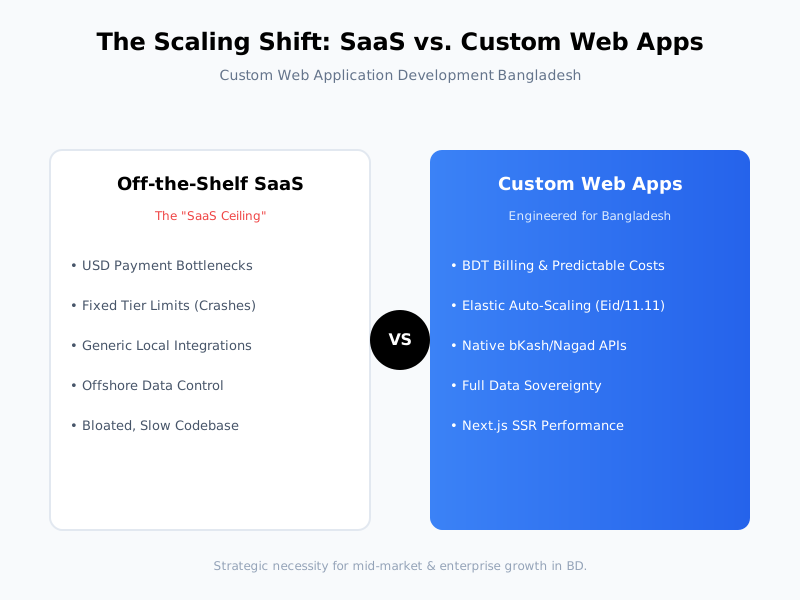
Comparing 3-Year Total Cost of Ownership (TCO): SaaS vs. Custom Apps
Let us analyze a mid-sized Bangladeshi enterprise processing 15,000 orders monthly with 30 back-office administrative seats.
| Cost Component | Enterprise SaaS Platform (e.g., Shopify Plus / Enterprise ERP) | Custom Web Application (Next.js + AWS Node Infrastructure) |
|---|---|---|
| Year 1 Setup & Development | ৳8,000,000 (Licensing + Initial Customization) | ৳1,500,000 – ৳3,500,000 (One-Time Engineering) |
| Year 1 Base Software Fees | ৳3,000,000+ ($2,500/mo converted to BDT) | ৳0 (No platform license fees) |
| Transaction & Plugin Fees | ৳1,200,000 (0.5%–2% platform cuts + plugin subscriptions) | ৳0 (Direct integration with bank/MFS processing fees only) |
| Hosting & Cloud Servers | Included in tier limits (Extra fees for traffic spikes) | ৳300,000 – ৳600,000 / year (Optimized cloud usage) |
| Years 2 & 3 Recurring Costs | ৳9,000,000+ (Subject to USD inflation & tier upgrades) | ৳800,000 – ৳1,200,000 (Server hosting + maintenance SLA) |
| Estimated 3-Year TCO | ৳21,200,000+ BDT | ৳2,600,000 – ৳5,300,000 BDT |
Note: Foreign subscription payments incur an additional 15% local bank VAT alongside foreign currency conversion markups.
Key Factors That Influence Custom Software Pricing in the Local Market
The actual custom web development cost in bangladesh varies based on architectural parameters:
- Functional Scope & Architectural Complexity: A single dynamic portal costs far less than a multi-tier microservices platform featuring custom logistics engines and multi-warehouse sync.
- Third-Party Integrations: Connecting custom web apps to core banking APIs, national NID verification portals, MFS systems, and custom legacy ERP systems requires custom integration engineering.
- Security Standards & Compliance Requirements: Enterprise-grade threat mitigation, role-based access controls (RBAC), and end-to-end data encryption require dedicated cybersecurity engineering.
- Maintenance & Service Level Agreements (SLAs): Ongoing cloud infrastructure management, security patching, and framework updates impact post-launch operating expenses.
Selecting the Right Enterprise Software Agency in Bangladesh
Choosing the wrong technology partner leads to delayed code deployments, poor database design, and unmaintainable tech stacks. When selecting an enterprise software agency in bangladesh, evaluate candidates against these technical criteria:
- Production Portfolio: Do they have a proven track record of shipping complex web applications and scaling cloud infrastructure?
- Modern Tech Stack Expertise: Do they specialize in modern React/Next.js frameworks, serverless backend deployments, and cloud architecture?
- In-House Engineering Team: Do they deploy full-time, in-house engineers, or do they outsource critical architecture design to freelance contractors?
- Clear SLA & Code Ownership Terms: Will your company own 100% of the IP and repository access upon project milestone completion?
Why Off-the-Shelf SaaS is a Trap for Ambitious Bangladeshi Founders
In my years architecting web applications for scaling companies, I have seen brilliant business models stall because founders fell into the “convenient SaaS trap.”
When you start out, paying $50/month for a ready-made platform feels like a smart financial move. But as your business grows, that platform becomes an invisible growth ceiling. You begin modifying your core operational workflows to match what the software allows, rather than building systems that serve your customers best.
In Bangladesh, this trap is twice as dangerous. Foreign exchange controls, currency fluctuations, missing local MFS webhooks, and unexpected platform rate hikes turn SaaS into a major strategic vulnerability.
Custom software is an investment that yields compounding operational returns. When you build custom software, every feature, every API endpoint, and every automation pipeline becomes permanent intellectual property that increases your company’s valuation.
“If your core operational workflow is what gives you a competitive edge in the market, renting that workflow from a generic SaaS vendor is a strategic misstep. Own your technology stack, or your technology stack will end up owning you.”
— Refat Hossain, Lead Systems Architect at CodeAdda
Key Takeaways: Is Custom Web Software Right for Your Business?
Decision Matrix: SaaS vs. Custom Web App
Use this framework to evaluate your software architecture roadmap:
[ Strategic Decision Matrix ]

Is your business model highly standardized?
  ├── YES ──> Choose Off-the-Shelf SaaS (e.g., Simple brochure site, generic retail shop)
  └── NO  ──> Do you process over ৳5,000,000/month or require MFS/ERP integrations?
                ├── YES ──> Build a Bespoke Custom Web Application
                └── NO  ──> Start with SaaS, but plan custom migration within 12-18 months
Next Steps to Transition Your Legacy Infrastructure with CodeAdda
Transitioning from an outgrown legacy system or rigid SaaS platform to a bespoke web platform requires a structured engineering approach:
- Audit Operations: Map every manual workaround your team currently performs due to platform limitations.
- Design API Architecture: Map all required third-party system connections, including bKash, Nagad, courier APIs, and internal accounting software.
- Build an Incremental Migration Plan: Move critical user workflows first to avoid operational disruption.
- Partner with Experienced Cloud Engineers: Work with specialized teams like CodeAdda to design, deploy, and manage your custom cloud infrastructure.
Whether you need high-volume e-commerce platform development, bespoke fintech interfaces, or secure AI-driven workflow engines, our team of Nextjs developers in Dhaka turns complex operational requirements into reliable, enterprise-grade web applications.
Frequently Asked Questions (FAQ)
What is the average custom web development cost in Bangladesh?
The cost of custom web application development in Bangladesh varies based on project complexity, security requirements, and scale. Mid-market custom web applications typically range from ৳150,000 to ৳500,000 BDT, while complex enterprise portals featuring custom cloud architectures, deep ERP connections, and custom payment integrations range between ৳600,000 and ৳3,500,000+ BDT. Compared to long-term USD SaaS subscription costs, custom applications offer a significantly lower 3-year Total Cost of Ownership (TCO).
Why should scaling businesses choose custom web application development over off-the-shelf SaaS?
Scaling enterprises choose custom web apps to eliminate recurring USD subscription risks, bypass foreign transaction limits imposed by local credit cards, and integrate natively with local payment platforms like bKash, Nagad, and SSLCommerz. Custom web applications deliver full ownership of source code, tailors user interfaces for mobile-first users, and auto-scales servers seamlessly during high-volume traffic events without requiring platform fee upgrades.
How do Next.js developers in Dhaka improve website performance and SEO?
Specialized Next.js developers in Dhaka leverage Server-Side Rendering (SSR) and Incremental Static Regeneration (ISR) to pre-render dynamic web pages on server nodes before delivering HTML to client browsers. This eliminates heavy client-side JavaScript execution, achieving sub-second load times on mobile 3G/4G networks across Bangladesh. Faster load times directly improve Google Core Web Vitals performance, driving higher local search engine rankings and lower customer acquisition costs.
How long does an enterprise software agency in Bangladesh take to deliver a custom web application?
A custom web application timeline depends on technical complexity. A focused Minimum Viable Product (MVP) or targeted business tool takes 6 to 10 weeks. Full-scale enterprise web applications with complex cloud infrastructure, multi-system API integrations, and rigorous security testing take 12 to 24 weeks from discovery and architecture design through to final production deployment.
Can custom web apps integrate seamlessly with local Bangladeshi payment systems like bKash and Nagad?
Yes. Custom web applications integrate directly with official merchant APIs for bKash, Nagad, Rocket, Upay, SSLCommerz, and Shurjopay without relying on fragile third-party middleware plugins. This direct integration enables instant, tokenized token-based checkouts, automated real-time payment reconciliation webhooks, reduced payment drop-off rates, and reliable payment logging during flash sales and peak seasonal promotional campaigns.
Article generated by SiteLift